"This being human is a guest house. Every morning a new arrival. A joy, a depression, a meanness, some momentary awareness comes as an unexpected visitor. Welcome and entertain them all! Even if they're a crowd of sorrows, who violently sweep your house empty of its furniture, still, treat each guest honorably. He may be clearing you out for some new delight. The dark thought, the shame, the malice, meet them at the door laughing, and invite them in. Be grateful for whoever comes, because each has been sent as a guide from beyond."
— Rumi
There is something quietly extraordinary about the way a 13th century Persian poet can speak so directly into the language of modern psychology. Rumi's Guest House has endured not because it is beautiful — though it is — but because it is true. And that truth finds a remarkable echo in two of the most powerful frameworks in contemporary inner work: Mindfulness and Internal Family Systems (IFS).
We Are Not a Single Room
One of the most liberating — and at times confronting — insights of both Mindfulness and IFS is that we are not a single, unified self. We are more like a house with many rooms, each occupied by different parts of us. Parts that feel scared or angry. Parts that carry anxiety or restlessness. Parts that have been there so long we have forgotten they are guests, not permanent residents.
IFS gives us a language for these parts. Mindfulness gives us a way to notice them with clarity. And Rumi, centuries before either, gave us a metaphor: welcome them all in.
Leaving Your Shoes at the Door
Of course, this kind of noticing is not always easy — and not always appropriate. When we are in a state of hyper-arousal, when the nervous system is up-regulated and we are in the thick of a reaction, it is not the moment to sit quietly and examine our inner landscape. We need to settle first.
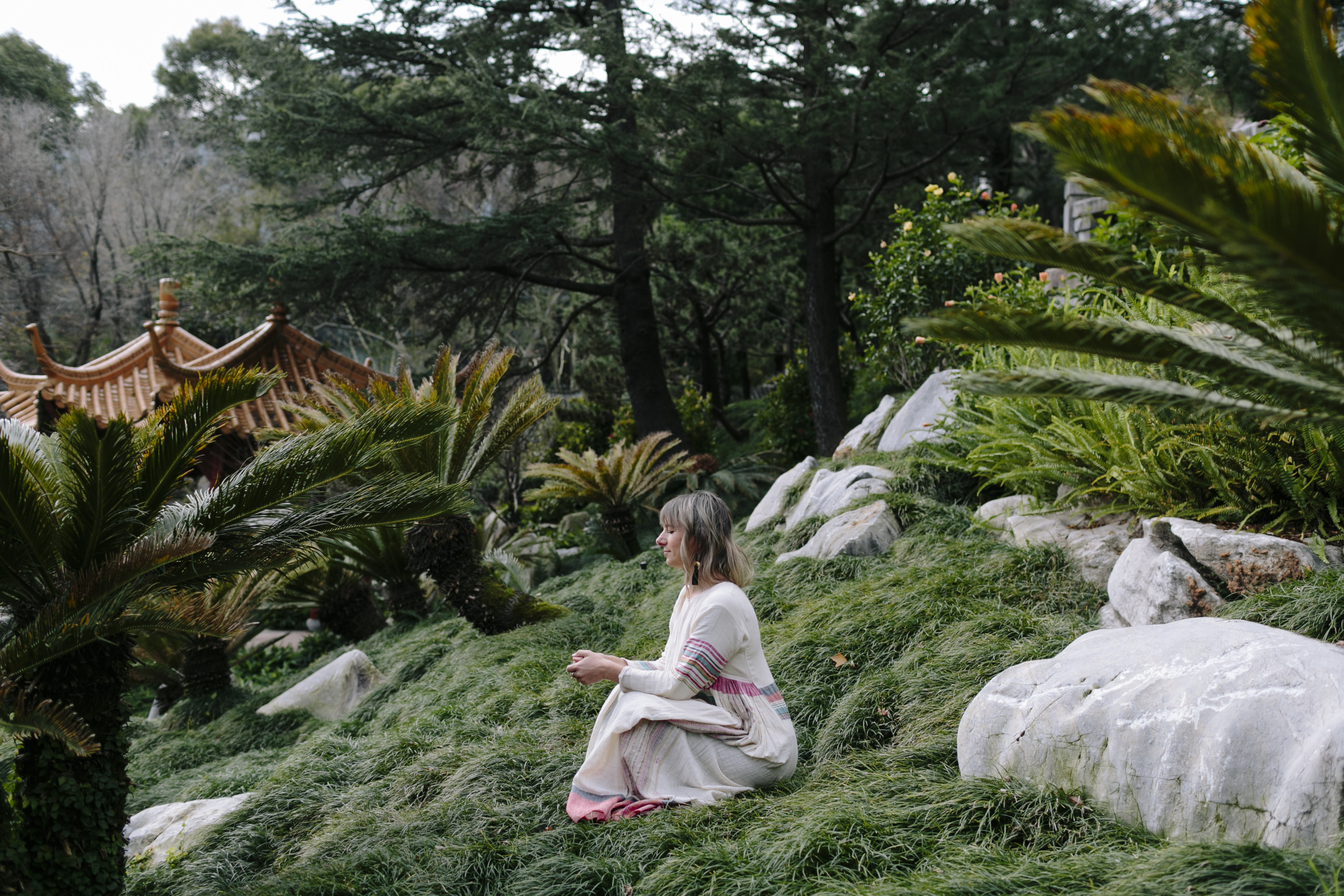
But when we can — when there is enough space — imagine approaching yourself the way you might step into a still, beautiful home after a long day in the rain. You leave your coat at the door. You shake out your hair. You step into the quiet, and you let yourself take it all in. You reside. You take up residence in your own experience.
That is the invitation of both Mindfulness and IFS: not to fix what is there, but first simply to be with it.
Meta-Awareness: The Witness Within
What makes this possible is something Mindfulness calls meta-awareness — sometimes described as the awareness of awareness itself. It is the part of us that can notice what is happening in this moment, as it unfolds, without being entirely swept away by it.
This is Rumi's host. The one standing at the door. Not merging with each guest who arrives, but greeting them, seeing them, and allowing them through.
In IFS, this quality is called Self — a calm, curious, compassionate presence that can be with all the parts without becoming any one of them. In contemplative traditions, it is sometimes called witness mind. Different languages, pointing toward the same quiet place.
Two Wings: Awareness and Compassion
In Mindfulness, we are often encouraged to practise with two wings — awareness and compassion. Awareness alone can be cold. Compassion alone can be undiscriminating. Together, they allow us to see clearly and hold gently.
This pairing is equally essential in inner healing work. It is not enough to notice the scared part, or the angry part, or the one that feels so ashamed. We also need to bring kindness to what we find there. Self-compassion is not indulgence — it is the very ground from which change becomes possible.
May I have the courage to see these parts of me. And may I have the gentleness to receive what I find.
Ancient Practice, Modern Science
What moves me about this weaving together of poetry, psychology, and contemplative practice is that it is not merely poetic licence. The evidence base for Mindfulness, and increasingly for IFS, is growing. We understand now how these practices work on the nervous system — how they support down-regulation, widen our window of tolerance, and build a more resilient and coherent sense of self.
The tools change. The understanding deepens. But the invitation remains the same one Rumi extended all those centuries ago.
Be grateful for whoever comes, because each has been sent as a guide from beyond.
The vicissitudes of life — its inevitable ups and downs — will keep sending guests. Some welcome, some not. The question is not whether they will arrive, but whether we can learn, slowly and with practice, to meet them at the door.
Whether you find your way there through Mindfulness, IFS, witness mind, or the simple beauty of a poem — the destination is the same: a wider view, a quieter nervous system, and a more compassionate relationship with yourself.