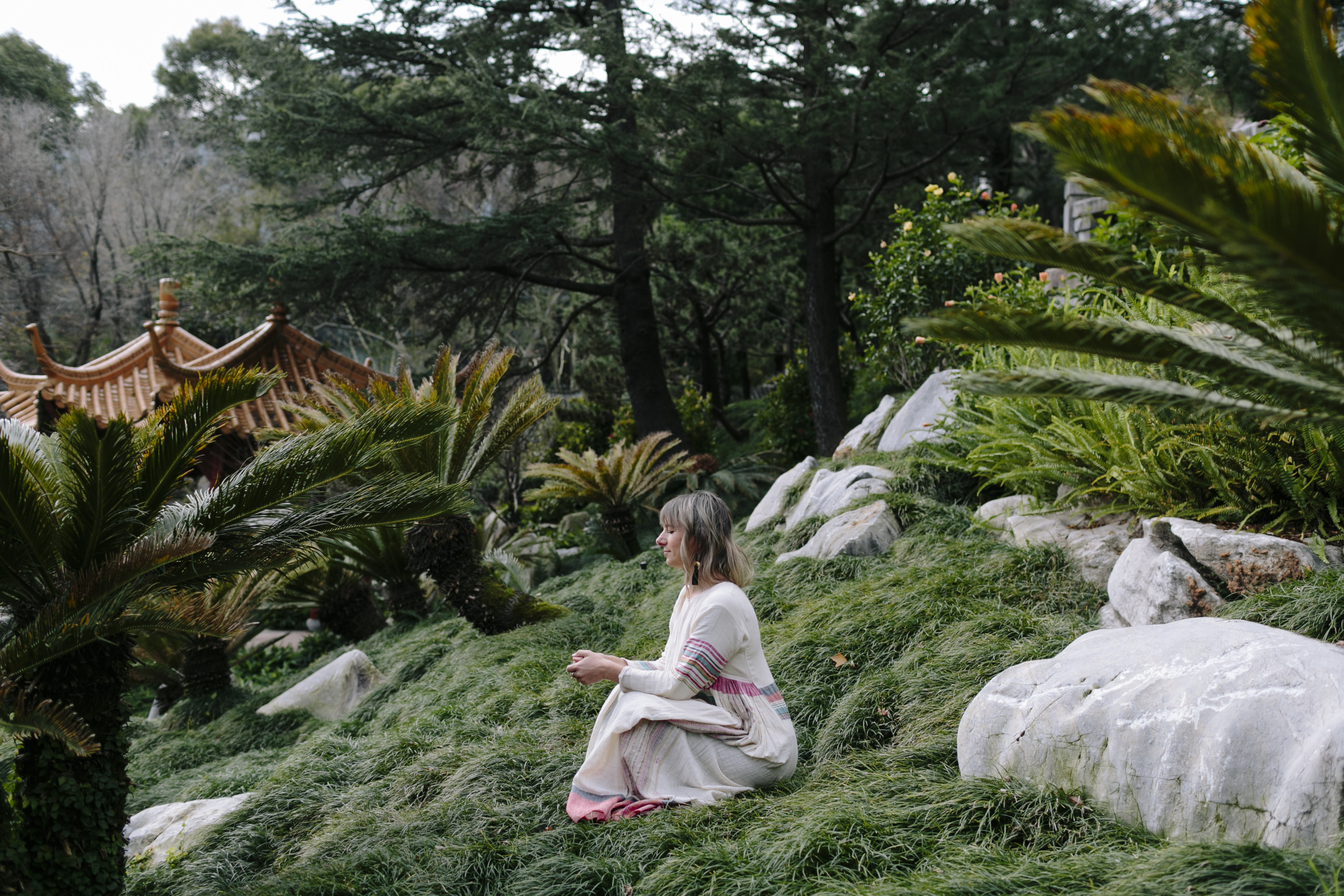
The Four Foundations of Mindfulness is a teaching said to have been given by the Buddha to his students — his Bhikkus — around 2,500 years ago. Mindfulness as we know it today is loosely rooted in these talks, and yet the wisdom feels as immediate and alive as ever.
Meditation isn't just wonderful for stress relief. It also allows us to have direct insight into ourselves — revealing our state of mind, how we hold ourselves, how we are. And through first seeing this clearly, we become able to heal it.
"We don't see life as it is, we see life as we are."
— Anaïs Nin
Through clearing the lens with meditation, we begin to see life more clearly — more connected to our own truth, and a little less scattered. Mindfulness is a tool for developing moment-to-moment awareness of our emotions, sensations, thoughts and other mental activities. It trains us to move through life with awareness, and in doing so, it can bring a quiet profundity to even the most ordinary moment.
We begin to feel more alive — actually tasting life as it unfolds, whether it's sweet or bitter — and through really being able to taste it, we feel more connected to it, and to ourselves within it.
"With mindfulness we understand that the only place to find peace and freedom from suffering is this very place, right here in our own body and mind."
— Bhante Gunaratana
We often tell ourselves we need energy in order to make the effort — I don't have the energy to meditate, I don't have the time — and we can say this to ourselves for years. But here's what I've found to be true: effort creates energy. By carving out the time to sit each day, we open up so much more of both.
Foundation One: Mindfulness of the Body
The body is the first and most tangible layer — it's where our inner world meets our outer environment, which makes it a natural and accessible place to begin. Even after the Buddha was considered enlightened, he continued to use breath awareness as his meditation. Simple as it sounds, it carries a quietly profound power to transform.
We begin by relaxing into the body — scanning through it, noticing where we're holding, where we're soft, where the breath moves and where it doesn't quite reach. We can try slapping the body gently to wake up sensation, then simply sensing what's there. Feeling awareness in the hands first, then letting it spread through the rest of the body.
"Trying to be mindful of the whole body is like trying to grab a heap of oranges. If we grab the whole heap at once, perhaps we will end up with nothing."
— Bhante Gunaratana
So we start small. We find the breath — and in finding the breath, we find the mind. When the mind joins the breath, even briefly, it becomes temporarily free. Joy rises naturally from that place.
Try this: swallow, and take your attention down to your lower belly. Rest there. You might breathe in with the quiet intention of calm, and breathe out with ease. Feel the breath — not forcing it, but letting yourself be breathed. When the mind wanders, simply begin again. And again. With patience, and without judgment.
Thich Nhat Hanh offers this for the harder moments: when a storm comes — when anxiety rises or the mind won't settle — sit quietly and return to your breathing and your body. Bring your attention down from your head to your belly, so you are no longer thinking and imagining — just following your breath closely.
I have passed through many storms. Every storm has to pass. No storm stays forever. This state of mind will pass.
When we look at the top of a tree being tossed about in a storm, we might fear it could be blown down at any moment. But if we look at the trunk — deep, rooted, steady — we know the tree will stand. Your belly is like that trunk. Return to it.
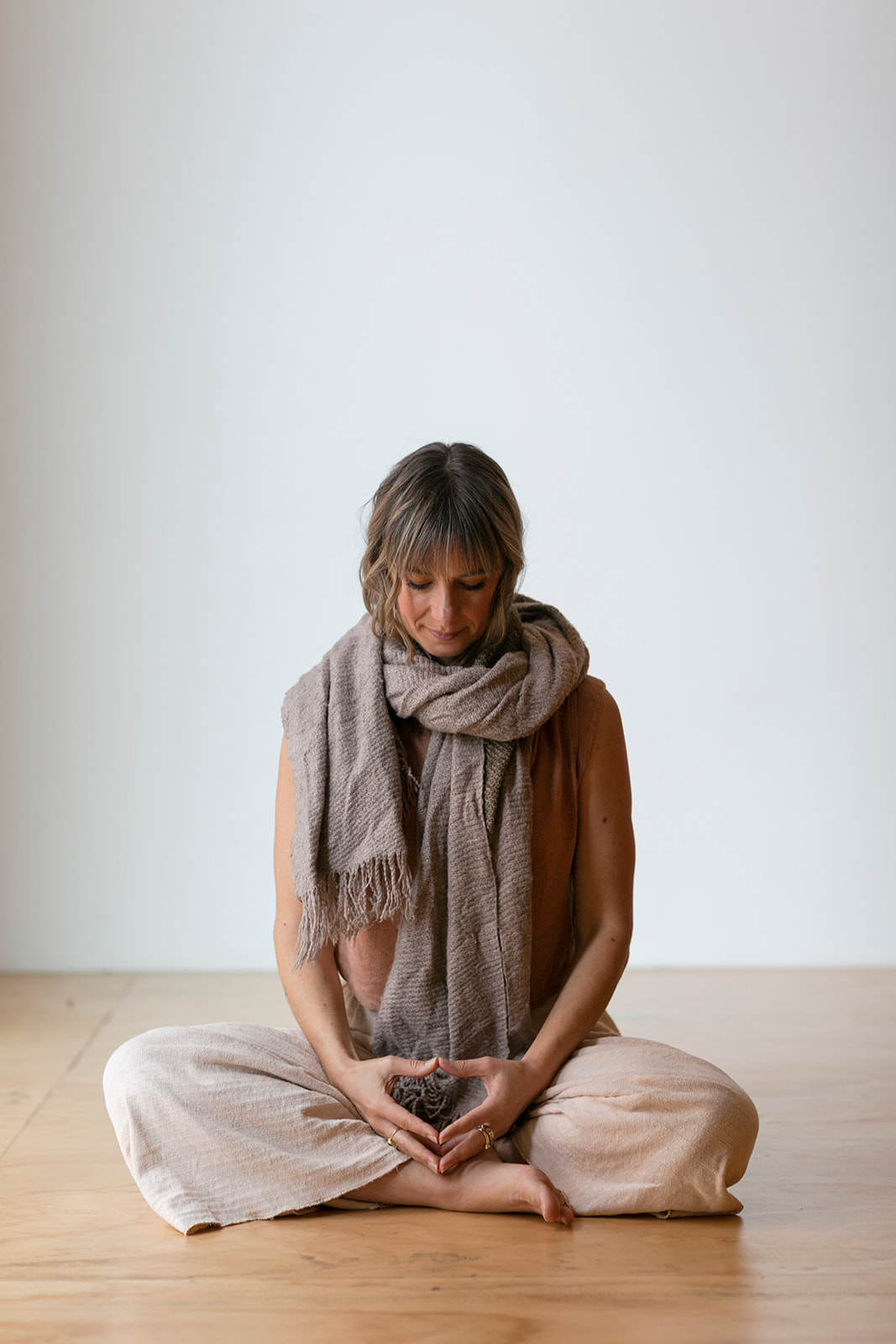
Foundation Two: Mindfulness of Feelings
The second foundation invites us to notice the feeling tone beneath every experience — what the teachings call vedana. Every sensation, sound, thought or emotion carries with it a quality of being pleasant, unpleasant, or neutral. This is often so subtle we miss it entirely, but it's driving so much of how we respond to life.
There's an important distinction here between feelings and emotions. Feelings pass — if you enquire into a feeling with curiosity, it tends to naturally dissolve. Emotions, on the other hand, can stick and become blocked, especially when we resist them.
The Buddha used the image of two darts. The first dart is the painful feeling itself — unavoidable, part of being human. But when we're not mindful, we add a second dart: the unpleasant mental reaction to the first. And that second dart so often causes more suffering than the first ever did.
Mindfulness of feelings doesn't mean we stop feeling. It means we learn to be with what's there without being swept away by it.
"Breathing in, I know that this is only the emotion. It's not the whole of me. I am more than my emotions."
— Thich Nhat Hanh
This is a simple insight — and yet it can be completely transformative. We are not our emotions. We can recognise what's there without becoming it. This is why a daily practice matters so much: we want to build this steadiness before the storm, not scramble for it in the middle of one.
Foundation Three: Mindfulness of Mind
The third foundation turns our attention to the mind itself — not the content of our thoughts, but the quality of awareness we bring to them. Are we contracted or open? Scattered or clear? Caught in an old story, or resting in the present?
The mind is endlessly inventive, endlessly busy — it generates thoughts the way the body generates breath, without being asked. The practice here isn't to stop the thoughts, but to know the mind that's thinking them. To observe without being absorbed.
Think of a garden. Left unattended, all manner of things will grow — weeds alongside flowers, brambles alongside beauty. Mindfulness of mind is the patient, daily act of tending that garden. Not with force, but with gentle, honest attention. What are we watering? What are we allowing to take root?
Mindfulness of mind is ultimately an act of knowing yourself — not the self you perform for the world, but the one underneath. Quiet, spacious, and already whole.
Foundation Four: Mindfulness of Phenomena
The fourth and final foundation — mindfulness of dhammas, or phenomena — is perhaps the most expansive. It's where practice opens out from the personal into the universal. We begin to see not just our own mind and body, but the nature of experience itself: how things arise, how they pass, how nothing is fixed or permanent, and how suffering tends to follow when we forget this.
At this level, mindfulness becomes less a technique and more a way of seeing. We begin to notice the impermanence threaded through everything — the way a mood shifts, the way a conversation changes the room, the way joy and grief can live so close together. Rather than being destabilising, this seeing brings a kind of relief. We stop gripping so tightly. We stop expecting things to stay the same.
The teachings invite us to look clearly at what causes suffering and what leads to its release — not as an abstract philosophy, but as something we can observe directly in our own experience, moment by moment. This is what makes the fourth foundation so quietly radical. It's not asking us to believe anything. It's asking us to look.
And in looking — really looking, with honesty and with warmth — we begin to find the freedom that was always here, waiting beneath the noise.
"Buddhism is a clever way to enjoy life. Happiness is available. Please help yourself to it."
— Thich Nhat Hanh